
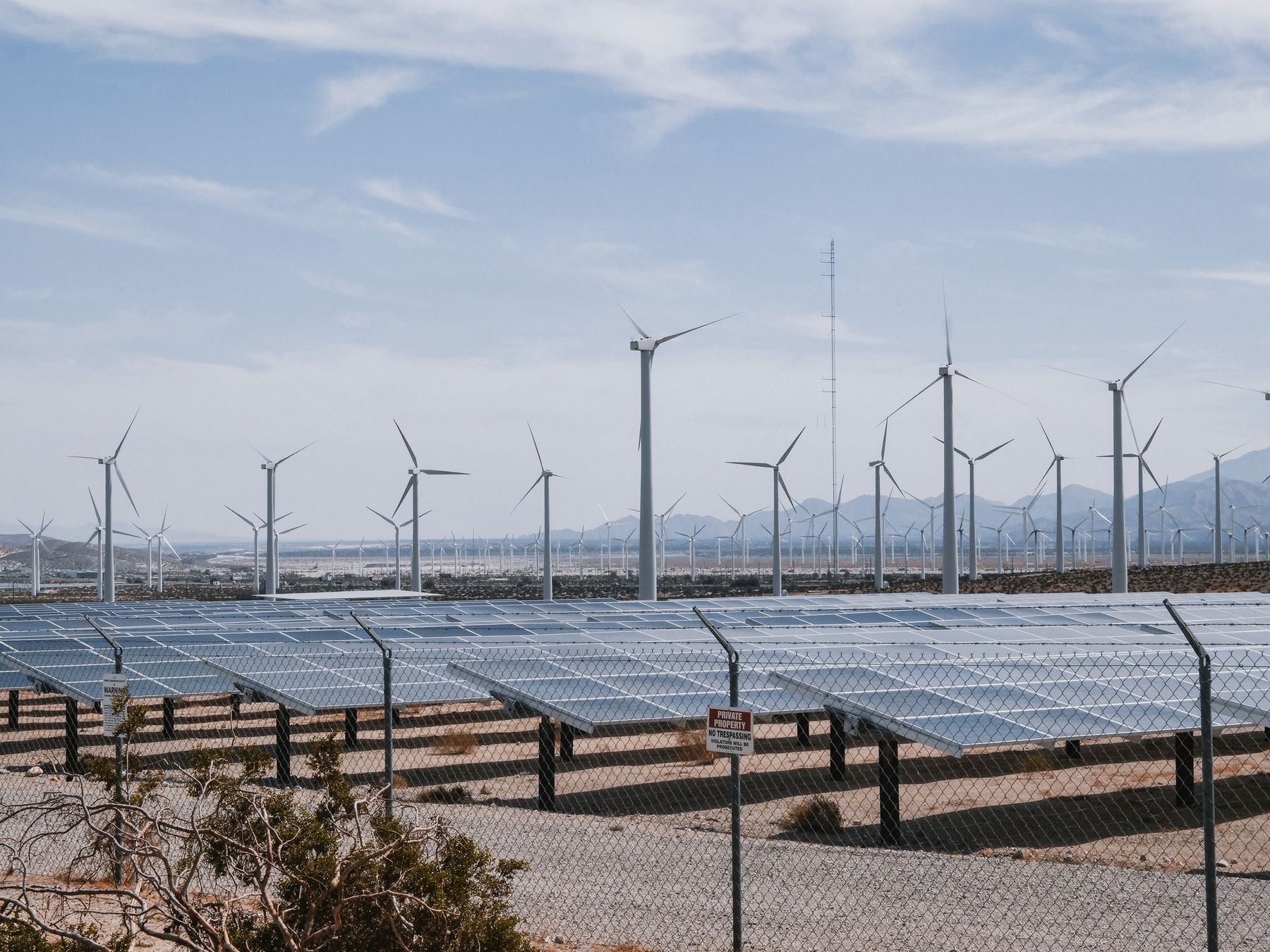
The Utility-Scale Solar Plant, a 200 MW facility we are delivering as EPC contractor for a confidential owner, has reached mechanical completion. The tracker arrays are installed, the collector substation is energized and the 12-mile tie line is in place. The plant has moved into commissioning, the last stretch before commercial operation.
What mechanical completion means
Mechanical completion is the point where construction is physically done and the systems are ready to be tested as a plant, not as parts. For a solar project that means every pile driven, every tracker row assembled and aligned, every module mounted and every string landed at its combiner or inverter. It also means the medium-voltage collection system is terminated and tested, and the collector substation is built and ready to carry power to the tie line.
Getting there took a field operation built around repetition. Pile driving, tracker assembly, module installation and electrical work moved across the site in sequenced blocks, with each crew handing a finished block to the next. Our quality team inspected each block before turnover, checking pile embedment, torque on tracker hardware, string polarity and insulation resistance on cable runs. Problems were fixed in the block where they were found, not saved for a punch list at the end.
The substation and the tie line ran on their own critical path. Major equipment deliveries, foundation pours, bus work, protection and control wiring and line stringing were sequenced so that backfeed power from the utility was available as the first arrays reached energization.
Commissioning now underway
Commissioning is where the plant proves it does what the design says it will. Over the coming weeks our commissioning team, working with the owner and the interconnecting utility, will:
- Energize arrays block by block and verify inverter performance against design output.
- Test tracker controls, including stow behavior in high wind, across every row.
- Verify substation protection settings and relay coordination with the utility.
- Bring the plant control system and monitoring online and confirm data reaches the owner's operators.
- Run the performance and capacity tests that support commercial operation.
A solar plant is thousands of small, identical tasks. Mechanical completion means every one of them was done right, and now we get to prove it.
Project manager, MarkWester
Built for open, windy country
The site brought its own conditions: wind, dust, wide temperature swings and long distances between work fronts. Crews worked early starts to stay ahead of afternoon heat and wind, and our logistics plan kept laydown areas, module deliveries and water trucks moving across a large footprint without slowing production.
We thank the owner, the design team, our trade partners and every craft professional who worked on the project. We look forward to handing over a plant that will deliver clean power to the grid for decades.